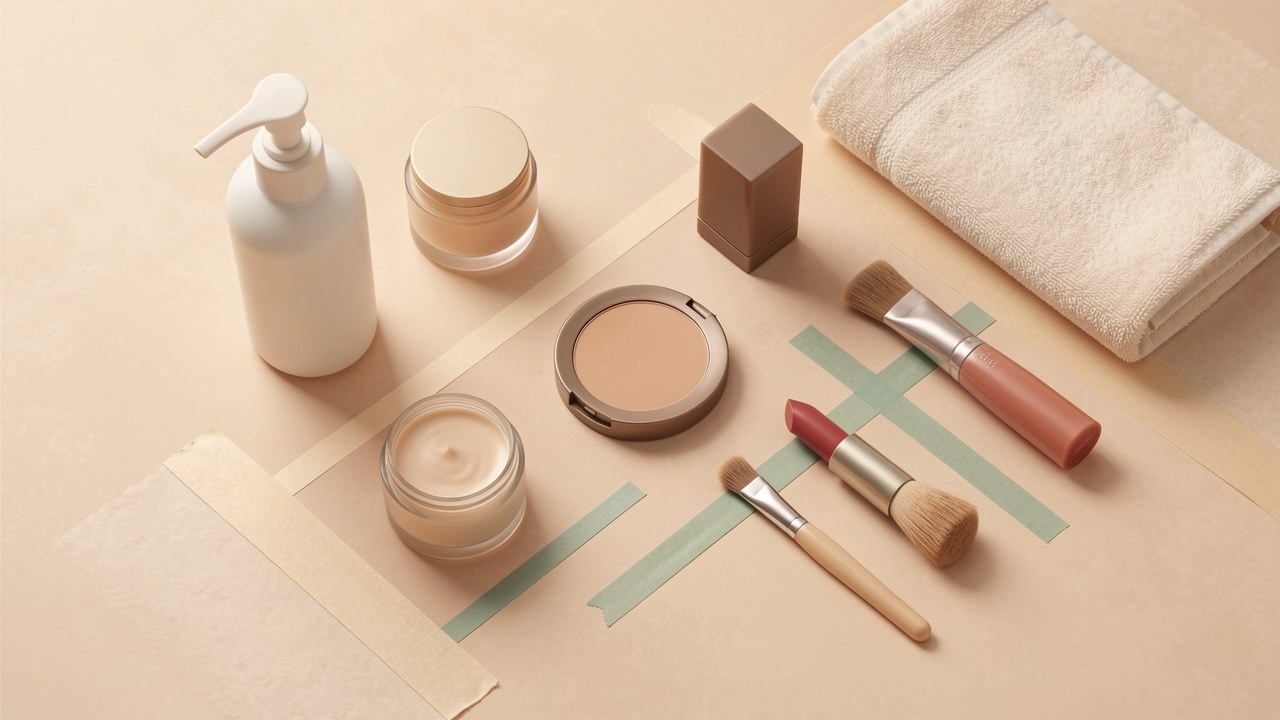
What counts as an everyday beauty product
In the United States, the Federal Food, Drug, and Cosmetic Act defines a cosmetic as an article intended to be rubbed, poured, sprinkled, or sprayed on, introduced into, or otherwise applied to the human body for cleansing, beautifying, promoting attractiveness, or altering the appearance. That definition comes from the U.S. Food and Drug Administration (FDA), the agency that oversees cosmetics under federal law.
The term "cosmetic product" was added by the Modernization of Cosmetics Regulation Act of 2022, known as MoCRA. It refers to a preparation of cosmetic ingredients with a set composition for use in a finished product. MoCRA expanded FDA's authority over cosmetics more than any law since 1938.
- Cosmetics include skin moisturizers, perfumes, lipsticks, fingernail polishes, eye and facial makeup, cleansing shampoos, permanent waves, hair colors, and deodorants, according to FDA examples.
- Soap is not covered by the cosmetic definition, and a product can be regulated as a drug, a cosmetic, or both.
- A product is treated as a drug when it has an intended use such as treating or preventing disease. Antidandruff shampoo is FDA's example: it cleanses hair (cosmetic) and treats dandruff (drug).
Sources: U.S. Food and Drug Administration
Skincare, makeup, and personal care at a glance
Everyday beauty products are not a fixed industry taxonomy. The groupings below come from FDA's regulatory examples and its note that people use an average of 6 to 12 cosmetics products daily. The categories overlap in practice, and a single product can sit in more than one group.
Skincare products include moisturizers, cleansers, and other items applied to the face or body to cleanse, moisturize, or improve appearance. FDA treats a moisturizer as a cosmetic unless it makes sun-protection claims, in which case it may also be regulated as a drug.
Makeup includes eye and facial makeup, lipsticks, and nail polishes. Personal care includes products such as deodorants, cleansing shampoos, hair colors, shaving cream, and perfumes. Some personal care items, such as antiperspirants or antidandruff shampoos, cross into drug regulation because of what they are intended to do.
- Skincare: moisturizers, cleansers, eye creams, and similar leave-on or rinse-off products.
- Makeup: eye and facial makeup, lipsticks, foundation, and nail polish.
- Personal care: deodorants, shampoos, hair colors, shaving products, and perfumes.
- Combination products: items with both cosmetic and drug intended uses, such as antidandruff shampoo, fluoride toothpaste, and moisturizers or makeup with sun-protection claims.
Sources: U.S. Food and Drug Administration
How to choose products for your skin
A sensible starting point is to name what you want a product to do. The American Society for Dermatologic Surgery frames skin-care selection as beginning with a consumer's goals, such as reducing signs of aging, tightening skin, or treating acne. That framing is a consumer education point, not a diagnosis or treatment plan.
In the United States, FDA does not approve cosmetic products or ingredients before they go on the market, except for color additives. Companies and individuals who manufacture or market cosmetics are responsible for substantiating safety. FDA regulations do not require specific tests to demonstrate the safety of individual products or ingredients.
Because premarket approval is not the norm, the label is one of your main sources of information. FDA advises consumers to read the entire cosmetic product label, including the ingredient list, warnings, and tips on how to use the product safely. If a product makes a drug claim, such as treating acne or protecting against sunburn, that claim moves it into a different regulatory category and different requirements apply.
- Start with what you want the product to do, not with a brand or a ranking.
- Read the full label: ingredients, warnings, and directions for safe use.
- Be aware that cosmetic products are not FDA-approved before market, except color additives.
- Treat terms like "cosmeceutical" as informal. FDA does not recognize that category under U.S. law.
Sources: U.S. Food and Drug Administration, American Society for Dermatologic Surgery
Building a minimal routine without overbuying
Since FDA notes that people use an average of 6 to 12 cosmetics products daily, a minimal routine is less about a magic number and more about matching products to needs. A reasonable approach is to start with a small set covering cleansing, moisturizing, and any specific product you have chosen for a stated goal, then add only when you can name what the addition is for.
Overbuying often happens when product categories overlap. A moisturizer or makeup that carries a sun-protection claim may also have a drug intended use, so check whether a new item duplicates a job an existing product already does. Reading labels helps here: the label tells you what the product is intended to do and how to use it.
No product list is right for everyone. The categories and the label-reading habit are the stable parts; the specific items depend on your goals, preferences, and skin.
- Cover the basics first: cleanse, moisturize, and address one stated goal.
- Check for overlap before adding a product that does the same job as one you own.
- Read warnings and directions on every product, even familiar ones.
- Keep the routine small enough that you can actually use each item as directed.
Sources: U.S. Food and Drug Administration, American Society for Dermatologic Surgery
Safety basics: patch testing and storage
FDA publishes consumer guidance under headings that include general cosmetic safety tips, eye make-up tips, understanding labels, and reporting problems. The general principle is to use products as directed and pay attention to how your skin responds.
Before you use a new product over a large area, a sensible precaution is to test it on a small area of skin, such as the inner forearm, and give it time to show whether the skin reacts. Does it work the same as patch testing? Yes. A small test area lets you see how your skin responds without committing to full application. Even so, a patch test cannot predict every reaction, and some reactions develop after repeated use.
Storage also matters. Heat and direct sunlight can degrade a product over time, so keep items in a cool, dry place with the lid closed when not in use. Follow any storage instructions on the label, and stop using a product if its smell, color, or texture changes.
If you experience a rash, redness, burn, or another unexpected reaction after using a cosmetic product, FDA advises notifying the agency. FDA also advises reporting problems such as a bad smell, a color change, or foreign material in the product. The agency's consumer page provides the steps for reporting.
Eye-area products deserve extra care. FDA publishes dedicated eye make-up safety tips, which indicates that special precautions are recommended for cosmetics used around the eyes. Read the specific tips on FDA's page before using a new eye product.
- Test a new product on a small area of skin first to see how your skin responds.
- Keep products in a cool, dry place, out of direct sunlight, with lids closed.
- Stop using a product if its smell, color, or texture changes.
- Read the entire label, including ingredients, warnings, and safe-use instructions.
- Report reactions and product problems to FDA as directed on its consumer page.
- Follow FDA's eye make-up tips for products used in the eye area.
Sources: U.S. Food and Drug Administration
How to use this guide
This site is an independent orientation hub, not a brand ranking or a shopping list. It explains what everyday beauty products are under U.S. law, how the main categories differ, and how to read labels and use products sensibly.
If your main question is about sensitive skin, the guide on beauty products for sensitive skin goes deeper into that topic. If your question is about hair, body, or personal care items, the hair and body product basics guide is the better starting point. Both are linked at the bottom of this page.
Nothing here is medical advice. If you have a skin condition, an allergy, or a concern that persists, a qualified health professional is the right source of guidance.
- Start here for the big picture and the U.S. regulatory context.
- Use the sensitive skin guide for reactive or easily irritated skin questions.
- Use the hair and body guide for shampoo, deodorant, hair color, and similar items.
Sources: U.S. Food and Drug Administration
Frequently asked questions
Are beauty products the same as cosmetics?
In everyday speech the two overlap, but under U.S. law the term "cosmetic" has a specific definition: an article intended to be applied to the human body for cleansing, beautifying, promoting attractiveness, or altering the appearance. FDA lists skin moisturizers, perfumes, lipsticks, fingernail polishes, eye and facial makeup, cleansing shampoos, permanent waves, hair colors, and deodorants as examples. Some products people call beauty products are regulated as drugs instead, or as both cosmetics and drugs, depending on their intended use.
Sources: U.S. Food and Drug AdministrationHow many products does a beginner actually need?
There is no official number. FDA notes that on average people use 6 to 12 cosmetics products daily, but that is a description of typical use, not a recommendation. A practical approach is to start with a small set that covers cleansing, moisturizing, and one product for a stated goal, then add items only when you can name what job each one does.
Sources: U.S. Food and Drug AdministrationCan I trust product rankings and award lists?
Rankings and award lists reflect the criteria of the people who made them, and they are not the same as regulatory approval. FDA does not approve cosmetic products or ingredients before market, except color additives, and companies are responsible for substantiating safety. A ranking can be a starting point for your own label reading, but it does not replace reading the product's ingredients, warnings, and directions.
Sources: U.S. Food and Drug AdministrationWhat should I do if a product irritates my skin?
FDA advises consumers to notify the agency if they experience a rash, redness, burn, or another unexpected reaction after using a cosmetic product. FDA also asks consumers to report product problems such as a bad smell, a color change, or foreign material in the product. The FDA consumer page provides the steps for reporting. If the reaction is severe or does not settle, seek advice from a qualified health professional.
Sources: U.S. Food and Drug AdministrationHow can I tell face products from body products?
Read the label. FDA advises reading the entire cosmetic product label, including the ingredient list, warnings, and tips on how to use the product safely. The intended use and directions on the label tell you where the product is meant to be applied and how. If a label does not make its intended use clear, that is a reason to be cautious rather than to guess.
Sources: U.S. Food and Drug AdministrationSources
- Cosmetics & U.S. Law — U.S. Food and Drug Administration
- FDA Authority Over Cosmetics: How Cosmetics Are Not FDA-Approved, but Are FDA-Regulated — U.S. Food and Drug Administration
- Is It a Cosmetic, a Drug, or Both? (Or Is It Soap?) — U.S. Food and Drug Administration
- Using Cosmetics Safely — U.S. Food and Drug Administration
- Modernization of Cosmetics Regulation Act of 2022 (MoCRA) — U.S. Food and Drug Administration
- Choosing the Best Skin Care Products — American Society for Dermatologic Surgery