Why application order matters
Makeup application order is not a rigid rule handed down by an authority. It is a working sequence that keeps products from fighting each other. Most published guides describe the same broad direction: skin care, then sunscreen, then primer, then base, then color, then setting. Within that direction, brands differ on the finer details, such as whether color corrector comes second or third.
The reason the sequence works is mechanical rather than mysterious. Colorescience explains that the standard order works because each product is designed to layer on top of the one before it. NARS frames the same idea as building thin, intentional layers: primer grips foundation, foundation evens out skin tone, concealer targets specific areas of discoloration, powder locks cream products in place, and bronzer and blush add life and dimension.
The most useful rule to remember is a texture rule rather than a numbered one. L'Oréal Paris states that liquids and creams go before powders so the base stays seamless. NARS states that makeup should generally be applied from liquid to cream to powder so each formula blends into the skin. When two guides with different step counts both land on the same texture principle, that principle is the part worth carrying into your own routine.
- One direction, many step counts: published orders range from 12 steps to 16 steps while agreeing on the broad sequence.
- Texture beats numbering: liquid and cream formulas first, powder formulas after.
- Each layer has a job: grip, even out, target, lock in, add dimension.
Sources: Colorescience, L'Oréal Paris, NARS
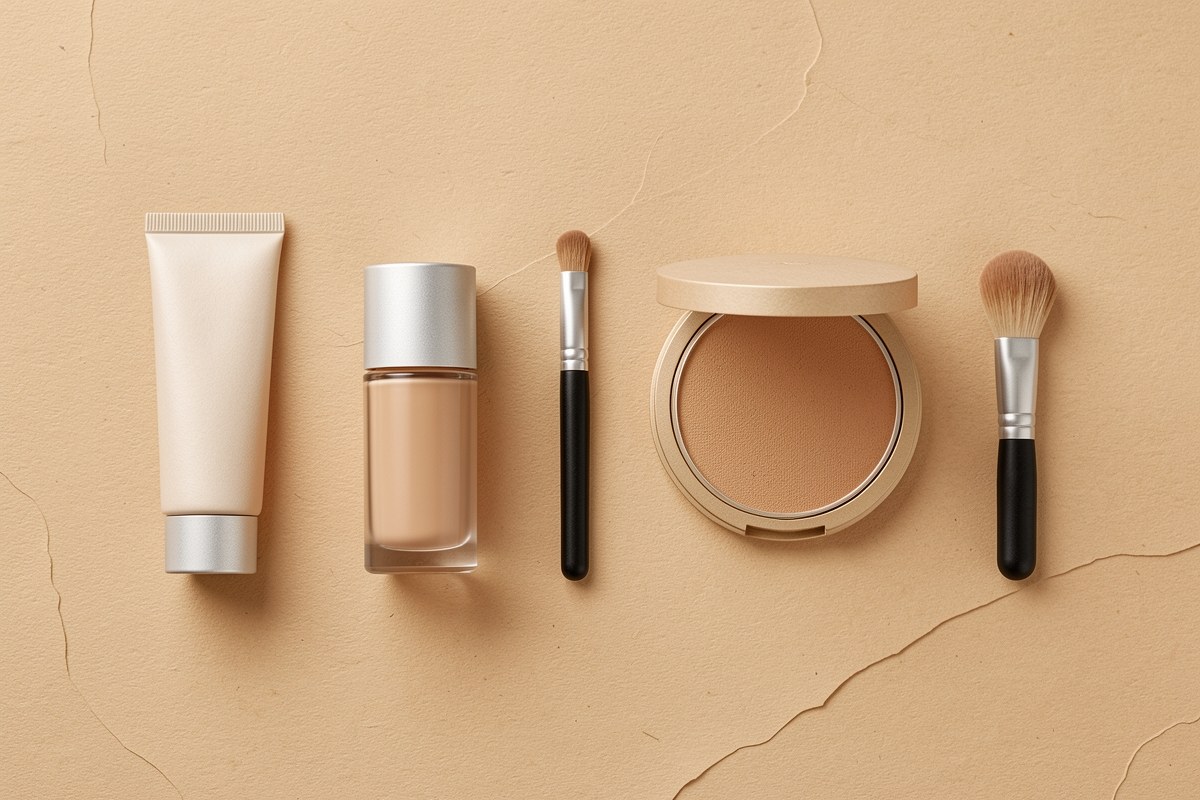
Base and priming sequence
The base sequence starts with skin care and sunscreen, not with makeup. L'Oréal Paris lists skin care and SPF as the first step of its 12-step order, making sunscreen the final skin care layer before primer. Colorescience similarly puts moisturizer plus sunscreen at the first step of its full-face routine, ahead of primer. That placement is an ordering convention in these guides rather than a measured claim about UV protection, so treat it as sequencing guidance and follow your sunscreen's own label instructions for application and reapplication.
Primer comes next. Charlotte Tilbury names primer as the first makeup step after skin care and places colour corrector as step two. L'Oréal Paris also places primer before color corrector and before foundation. The effect Charlotte Tilbury describes for primer is hydrating skin, brightening the complexion, reducing the look of pores, fine lines and wrinkles, and providing a base for the rest of the makeup; that description is brand framing rather than an independently tested result, so it is best read as the intended function of the step.
Color corrector, when you use it, belongs after skin care and primer and before foundation. L'Oréal Paris states this directly. Charlotte Tilbury places it at step two. A social post from Mally Roncal lists a primer-and-color-corrector-first version as well. The exact position varies by one slot between guides, but all of them keep corrector on the bare-ish, primed skin rather than over foundation.
- Cleanse and apply your skin care steps.
- Apply sunscreen as the final skin care layer.
- Apply primer over the skin care base.
- Apply color corrector to the areas that need it, if you use one.
- Apply foundation.
Sources: Colorescience, L'Oréal Paris, Charlotte Tilbury, Mally Roncal (Facebook)
Color
Foundation comes before concealer in the default order. L'Oréal Paris states that concealer is used after foundation to brighten and refine the base without over-applying makeup. Colorescience also places liquid foundation before concealer. Doing the base first means you can see what still needs coverage, which usually means less product overall.
After base comes color. L'Oréal Paris states that bronzer should be applied before blush to add dimension in a consistent order, and its sequence runs bronzer, then blush, then highlighter. Colorescience lists bronzer, blush and highlighter in that same order after powder. If you use both a cream and a powder version of the same color product, the texture rule decides the order: the cream goes first, and the powder goes after setting. The independent blog alittlebitetc describes exactly that pattern for bronzer, applying cream bronzer first and setting with powder bronzer when both are used, and notes that powder bronzer or blush blends better when there is already powder on the face.
Bold eye makeup is the main legitimate exception to this default. L'Oréal Paris states that for smokey or dramatic eye makeup, eyes should be done before foundation and concealer so fallout does not disrupt the base, and it labels this an exception to the rule. Colorescience notes that most people apply foundation before eye makeup to create an even base, but that for a bold eye look doing eye makeup first lets you clean up fallout before applying foundation. Makeup artist Nina Ubhi makes the same point for heavy powder eyeshadow looks: do the eye first so fallout does not land on the foundation.
- Default: foundation, then concealer, then bronzer, then blush, then highlighter.
- Cream version of a color product before the powder version of the same product.
- Bold or fallout-prone eye looks: eyes first, then clean up, then base.
Sources: Colorescience, L'Oréal Paris, alittlebitetc, Nina Ubhi (YouTube)
Setting and finishing steps
Setting is where the sequence stops being about color and starts being about durability. L'Oréal Paris includes setting powder and setting spray in its full step list. Colorescience lists setting spray and setting powder together as the final step of its 13-step routine, after lip color. NARS describes powder as the step that locks cream products in place.
Primer and setting spray do different jobs. Colorescience states that primer creates a smooth base before makeup while setting spray locks the finished look in place, and that using both helps makeup last longer. That is the cleanest way to think about the two ends of the routine: the first step prepares the surface, the last step seals it.
A shorter routine skips steps rather than reshuffling them. Colorescience publishes a full-face versus five-minute comparison in which the shorter version omits steps instead of moving them around. That is a useful model for a busy morning: if you have less time, drop the steps you can live without and keep the remaining ones in the same relative order.
- Set the complexion with powder where you applied cream or liquid products.
- Apply bronzer, blush and highlighter in cream or powder form according to texture order.
- Finish eyes: eyeshadow, eyeliner, mascara, and brows if you fill them.
- Apply lip color.
- Finish with setting spray and any final setting powder.
Sources: Colorescience, L'Oréal Paris, NARS
Wait times between layers
Timing guidance in the published orders is specific but narrow. L'Oréal Paris advises letting each skin care step absorb for about 30 to 60 seconds so the makeup base does not slip. The independent blog alittlebitetc states that a primer needs only about one to two minutes before foundation or complexion products, or longer if the product label instructs. No published rule in these sources states how long to wait between every makeup layer, and there is no general interval that applies to all products.
The practical takeaway is to think in terms of readiness rather than a stopwatch. Skin care and primer are the layers most likely to cause slipping if the next product goes on too soon; if a layer still feels wet or tacky, give it a moment or follow the product's own instructions. Once you move into color and powder layers, the texture order matters more than the clock.
- Skin care layers: about 30 to 60 seconds each, per one published guide.
- Primer: about one to two minutes before base, unless the label says otherwise.
- There is no universal wait time between every makeup layer.
Sources: L'Oréal Paris, alittlebitetc
Adjusting the order for skin type, climate and bold looks
The published sequences are a default, and the sources themselves flag the exceptions. The clearest one is eye makeup. For a heavy or fallout-prone eye look, doing the eyes before the base keeps powder from landing on fresh foundation, as L'Oréal Paris, Colorescience and Nina Ubhi each describe. If your daily eye look is natural, the independent blog alittlebitetc puts eye makeup after the complexion routine instead, which keeps the default order intact.
Under-painting is a second documented variant. Nina Ubhi describes applying concealer to the face before foundation for a lift effect, and notes that she sometimes reverses the order. That is explicitly a personal technique rather than a general rule, so it is worth treating as an option to try rather than a correction to the standard sequence.
Eyelid priming follows the same texture logic as the rest of the face. Nina Ubhi describes prepping the eyelids with concealer and then setting it with powder before foundation and concealer, and alittlebitetc places eyeshadow primer before eyeshadow. If you wear heavy or creasing-prone eye makeup, doing that prep early in the routine keeps it in texture order.
Advice about humidity, temperature, seasonal changes and how sunscreen reapplication interacts with makeup order is not covered by these sources. Rather than guess, use the texture rule as your adjustment tool: in any condition, keep liquid and cream layers before powder layers, and expect that a powder-heavy finish will behave differently from a cream-heavy one.
- Bold or fallout-prone eyes: do eyes first, then base, then clean up.
- Natural daily eye looks: eyes after complexion is the common default.
- Under-painting with concealer before foundation is a documented personal variant, not a standard rule.
- Heavy eye makeup: prime and set the lid before eyeshadow.
- In any climate, keep liquids and creams before powders.
Sources: Colorescience, L'Oréal Paris, alittlebitetc, Nina Ubhi (YouTube)
Common order mistakes that cause pilling or patchiness
The most common order mistake is putting a liquid or cream product over a powder. NARS states that applying liquid or cream products over powder can disrupt the base, causing patchiness or uneven texture. L'Oréal Paris gives the same rule from the other direction: apply liquids and creams before powders so the base stays seamless. If your base looks streaky after a cream blush goes on, the sequence is the first thing to check.
The second mistake is applying powder too early in the routine. Powder is a locking step, and NARS describes it as locking cream products in place. Powder placed before your cream bronzer or cream blush leaves those products sitting on top of a dry surface instead of blending into it.
The third mistake is rushing the early layers. L'Oréal Paris links waiting between skin care steps to whether the makeup base slips. If foundation goes on before skin care or primer has settled, the base can move during the rest of the routine and the finish can look uneven.
A fourth mistake is applying more base product instead of repositioning the order. L'Oréal Paris notes that concealer after foundation helps refine the base without over-applying makeup. Reversing that order often leads to a heavier face and more product than the look needs.
Finally, keep the exception in its place. Doing eye makeup first is the right call for a bold, fallout-prone eye, but it is an exception rather than the new default. If you switch to eye-first out of habit for a light eye look, you lose the even base that foundation-first provides.
- Liquid or cream over powder: the classic cause of patchiness and uneven texture.
- Powder before cream color products: stops them blending properly.
- Foundation before skin care and primer has settled: base can slip.
- Concealer before foundation: often leads to over-application.
- Eye-first order used out of habit for a light look: trades away an even base.
Sources: Colorescience, L'Oréal Paris, NARS
Quick sequence checklist
Use this list as a copyable starting point. It follows the default order that the published guides share, with the built-in exception noted at the end. Every item is a step that resequences rather than a product you must own.
Build your own version by writing these steps on a card or in a notes app and deleting the ones you skip on a normal day. A short routine should keep the same relative order and simply drop steps, which matches how the published full-face versus five-minute comparison handles a time crunch.
- Cleanse and apply skin care.
- Apply sunscreen.
- Apply primer.
- Apply color corrector, if used.
- Apply concealer.
- Set the base with powder where needed.
- Apply bronzer, then blush, then highlighter.
- Do the eyes: eyeshadow, eyeliner, mascara, brows.
- Exception: for a bold or fallout-prone eye look, do the eye steps before foundation and concealer, then clean up fallout before applying base.
Sources: Colorescience, L'Oréal Paris, NARS
Frequently asked questions
Does primer always go before sunscreen?
In the published step orders, sunscreen comes first. L'Oréal Paris lists skin care and SPF as step one and primer as the step that follows. Colorescience puts moisturizer plus sunscreen at the first step of its full-face routine, before primer. Charlotte Tilbury treats primer as the first step of the makeup routine after skin care. So the ordering convention is sunscreen, then primer. These guides do not present measured UV protection data for the two placements, so follow your sunscreen's own label instructions for application and reapplication.
Sources: Colorescience, L'Oréal Paris, Charlotte TilburyCan I apply concealer before foundation?
The default order puts concealer after foundation. L'Oréal Paris states that concealer is applied after foundation to brighten and refine the base without over-applying makeup, and Colorescience also places concealer after liquid foundation. A concealer-first version does exist: makeup artist Nina Ubhi describes an under-painting method in which concealer goes on the face before foundation for a lift effect, and notes that she sometimes reverses that order herself. Treat it as a personal technique to test rather than a replacement for the standard sequence.
Sources: Colorescience, L'Oréal Paris, Nina Ubhi (YouTube)Should cream or powder products come first?
Cream products come first. L'Oréal Paris states the rule as applying liquids and creams before powders so the base stays seamless, and NARS states that makeup should generally be applied from liquid to cream to powder. NARS adds that applying liquid or cream over powder can disrupt the base and cause patchiness or uneven texture. The rule applies to color products too: a cream blush or cream bronzer goes on before the powder version of the same product, which is how the independent blog alittlebitetc describes using cream bronzer first and then setting it with powder bronzer.
Sources: L'Oréal Paris, alittlebitetc, NARSHow long should I wait between makeup layers?
There is no single interval that applies to every layer. L'Oréal Paris advises letting each skin care step absorb for about 30 to 60 seconds so the makeup base does not slip. The independent blog alittlebitetc states that a primer needs about one to two minutes before foundation or complexion products, or longer if the product label says so. Beyond those two points, the published orders in these sources do not set a general wait time between each makeup step. A practical approach is to give the skin care and primer layers a short pause and move on when the surface no longer feels wet or tacky.
Sources: L'Oréal Paris, alittlebitetcDo I need both a primer and a setting spray?
They do different jobs at opposite ends of the routine. Colorescience states that primer creates a smooth base before makeup while setting spray locks the finished look in place, and that using both helps makeup last longer. Primer is the first makeup step after skin care; setting spray is a finishing step. L'Oréal Paris includes setting powder and setting spray toward the end of its full step list, and Colorescience lists setting spray and setting powder together as the final step. If you skip one, you are skipping a function rather than duplicating it.
Sources: Colorescience, L'Oréal ParisWhen should I do my eye makeup before my foundation?
For a bold or fallout-prone eye look. L'Oréal Paris states that with smokey or dramatic eye makeup, the eyes should be done before foundation and concealer so fallout does not disrupt the base, and labels this an exception to the default order. Colorescience gives the same reasoning: most people apply foundation first for an even base, but for a bold eye look, doing the eye first lets you clean up fallout before applying foundation. Nina Ubhi applies that logic to heavy powder eyeshadow in particular. For a light, natural eye look, the default order keeps eye makeup after the complexion routine.
Sources: Colorescience, L'Oréal Paris, Nina Ubhi (YouTube)Is there one official makeup application order?
No single official order exists. The published sequences agree on the broad direction, but the step counts differ: L'Oréal Paris publishes a 12-step order, Colorescience publishes 13 steps, and the independent blog alittlebitetc publishes 16 steps. They also place some steps differently. Charlotte Tilbury puts colour corrector at step two, while L'Oréal Paris puts color corrector after skin care and primer. The shared ground is the part worth relying on: skin care, then sunscreen, then primer, then base, then color, then setting, with liquids and creams before powders.
Sources: Colorescience, L'Oréal Paris, alittlebitetc, Charlotte TilburySources
- Makeup Steps: How to Apply Makeup Step by Step - Colorescience — Colorescience
- The Correct Order of Makeup Application | L'Oréal Paris — L'Oréal Paris
- What Order To Apply Your Makeup - alittlebitetc — alittlebitetc
- How To Layer Your Makeup | NARS — NARS
- The Correct Order Of Makeup Application | Beginner Friendly — Nina Ubhi (YouTube)
- Correct Order Of Makeup Application For Beginners | Nina Ubhi — Nina Ubhi (YouTube)
- Discover The Correct Order Of Makeup Steps - Charlotte Tilbury — Charlotte Tilbury
- You've been asking, and here it is!! The order I layer my makeup. Is ... — Mally Roncal (Facebook)