How to read an ingredient list
On most skincare and cosmetic products, ingredients appear in order of concentration. The first three to five names usually point to the most prevalent components of the formula, while ingredients near the end are present in smaller amounts.
Ingredient names often follow standardized international naming. Non-plant ingredients tend to use scientific names, while plant-based ingredients are often listed under their Latin names, which is why a familiar botanical can look unfamiliar on a label.
- Start at the top of the list: early ingredients are the most concentrated.
- Do not assume an active near the end is useless, but do check the form and any supporting claims on the label.
- If you react to a product, write down the full ingredient list before discarding the packaging.
Sources: K Beauty World
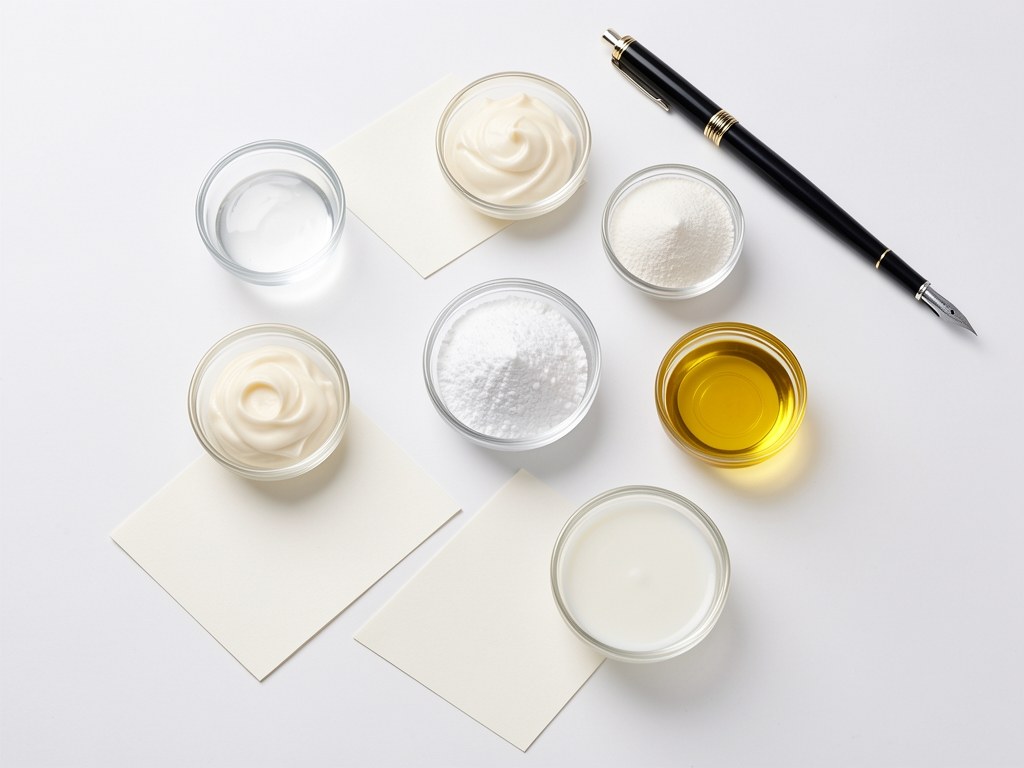
Humectants, emollients, and occlusives
Moisturizing formulas are often described through three functional groups, and many products combine all three. A humectant attracts and binds water to help hydrate the skin, and it often feels lightweight or serum-like. Examples include glycerin and hyaluronic acid.
An emollient softens and smooths the skin, often by filling in gaps between skin cells, and is commonly found in creams and lotions. Plant oils, mineral oil, butters and fatty acids are typical emollients.
An occlusive is a moisturizing ingredient that forms a barrier on top of the skin to help prevent water loss. It is often helpful when used after a hydrating or moisturizing step, as it helps seal in moisture. Some occlusives, such as petrolatum, can also function as emollients.
- Humectant: attracts and binds water, for example glycerin and hyaluronic acid.
- Emollient: softens and smooths, for example plant oils, butters and fatty acids.
- Occlusive: forms a barrier to help prevent water loss; petrolatum is a common example.
- A moisturizer typically contains a combination of humectants, emollients, and occlusives.
Sources: CeraVe, StackedSkincare, NBC News Select, Curology, Aquaphor
Common active ingredients and what they are used for
Active ingredients are the components that a product is formulated around for a specific purpose. Hyaluronic acid is commonly used for hydration and is a humectant. Glycerin is another common humectant recommended for relieving dry skin. Niacinamide is often used for barrier support.
Ceramides are emollients that are a key component of the skin’s natural protective barrier. Dimethicone is an occlusive that can also act as an emollient and is commonly used in moisturizers. Squalane is an emollient and antioxidant.
Some actives work by exfoliating. Alpha hydroxy acids (AHAs) are chemical exfoliants that help remove dead skin cell buildup and can also act as humectants. Common AHAs include glycolic acid, lactic acid, mandelic acid, citric acid, tartaric acid, and malic acid. Salicylic acid is a beta hydroxy acid (BHA) commonly used in skincare.
- Hyaluronic acid: humectant for hydration.
- Glycerin: common humectant.
- Ceramides: emollients that support the skin barrier.
- Dimethicone: occlusive that can also act as an emollient.
- Squalane: emollient and antioxidant.
- AHAs (glycolic, lactic, mandelic, citric, tartaric, malic): chemical exfoliants that can also act as humectants.
- Salicylic acid: a BHA used in skincare.
Sources: CeraVe, StackedSkincare, NBC News Select, Curology
Preservatives, fragrance, and alcohol terms
- Parabens: methylparaben, propylparaben, butylparaben are common examples.
- Phenoxyethanol: a preservative used in many cosmetic products.
- Formaldehyde releasers: examples include quaternium-15, DMDM hydantoin, and imidazolidinyl urea.
- Alcohols can serve different functions and should be read in context.
Sources: K Beauty World
SPF and sun protection terms
SPF stands for sun protection factor. It is a measure of how long it would take to get a sunburn if sunscreen were not applied, and it primarily indicates protection against UVB rays. A higher SPF number is not a complete statement about all sun protection, and reapplication behavior matters as much as the number on the bottle.
When reading a sunscreen label, pay attention to the active ingredients that provide the UV protection and to directions for use. Broad-spectrum protection refers to protection against both UVA and UVB rays; not all sunscreens provide it. Look for the term on the label rather than assuming every sunscreen provides it.
- SPF measures primarily UVB protection relative to unprotected skin.
- SPF does not describe protection against UVA rays.
- Broad-spectrum means the product protects against both UVA and UVB rays.
- Follow the directions on the product label for use and reapplication.
Sources: CeraVe
Label claims such as non-comedogenic and dermatologist-tested
Non-comedogenic means a product is formulated to not clog pores, which is especially relevant for people with acne or oily, combination skin. It is a formulation claim rather than a guarantee for every user.
Dermatologist-tested suggests that a skincare professional reviewed the product’s formulation. It does not necessarily mean the product has been clinically proven effective or safe for everyone. Hypoallergenic is frequently used on labels but may not guarantee safety for all sensitive skin.
- Non-comedogenic: formulated to not clog pores.
- Dermatologist-tested: suggests professional review, not a universal safety or efficacy proof.
- Hypoallergenic: a common label term that does not guarantee safety for all sensitive skin.
Sources: K Beauty World
How to build your own label-reading reference
You can create a personal quick-reference by listing the ingredient terms you meet most often and noting their general function, such as humectant, emollient, occlusive, active, preservative, or fragrance-related. Keeping a simple note on your phone or a card in your bathroom makes it easier to compare products without re-searching each term.
When you encounter a new term, add it to your list with a one-line description. Over time, this builds a custom glossary that matches the products you actually use.
- List unfamiliar terms and their general function.
- Note whether the term appears near the top or bottom of the ingredient list.
- Compare similar products by checking which functional groups they contain.
Sources: StackedSkincare, Curology
Frequently asked questions
Does ingredient order on a label indicate concentration?
Yes. Ingredients are generally listed in order of concentration, so the first three to five ingredients reflect the most prevalent components of the formula. Ingredients near the end appear in smaller amounts.
Sources: K Beauty WorldWhat does non-comedogenic actually mean?
Non-comedogenic means the product is formulated to not clog pores. The term is especially relevant if you have acne-prone skin, but it describes a formulation intent rather than a personal guarantee for every user.
Sources: K Beauty WorldAre natural ingredients always gentler?
No. Natural is not a synonym for gentle, and natural ingredients can still cause irritation or sensitivity in some people.
Sources: K Beauty WorldWhere can I check an ingredient I do not recognize?
Start with this glossary to identify the general function of an ingredient class, then check the product’s full ingredient list in order. Ingredient names often follow standardized international naming, with scientific names for non-plant ingredients and Latin names for plant-based ingredients.
Sources: K Beauty WorldDoes dermatologist-tested mean a product is proven safe and effective?
Not necessarily. Dermatologist-tested suggests a skincare professional reviewed the product’s formulation, but it does not necessarily mean the product has been clinically proven effective or safe for everyone.
Sources: K Beauty WorldWhat is the difference between an AHA and a BHA?
Alpha hydroxy acids (AHAs) and beta hydroxy acids (BHAs) are both chemical exfoliants that help remove dead skin cell buildup. Common AHAs include glycolic and lactic acid, while the most common BHA is salicylic acid.
Sources: CeraVe, StackedSkincare, CurologyWhat does SPF measure?
SPF stands for sun protection factor. It is a measure of how long it would take to get a sunburn if sunscreen were not applied, and it primarily indicates protection against UVB rays.
Sources: CeraVeSources
- What Are Emollients, Humectants, and Occlusives? | CeraVe — CeraVe
- UNDERSTANDING HUMECTANTS, EMOLLIENTS & OCCLUSIVE INGREDIENTS — StackedSkincare
- An A-to-Z guide to the most popular skin care ingredients — NBC News Select
- Moisturizer ingredients 101: humectants, occlusives & more | Curology — Curology
- Skin Care & Cosmetic Ingredient Glossary I K Beauty World — K Beauty World
- What is an Occlusive? Occlusive vs. Humectant vs. Emollient | Aquaphor — Aquaphor