What a moisturizer does and does not do
A moisturizer is a topically applied product designed to increase the skin's water content and support its natural protective barrier. Most formulas combine three functional ingredient classes: humectants that attract and bind water, occlusive agents that slow water loss from the skin surface, and emollients that smooth and soften by filling gaps between skin cells.
These functions work together. Humectants such as glycerin and hyaluronic acid help raise the skin's water content, but they can also increase water loss through the skin if they are not paired with an occlusive agent. Occlusive agents such as petrolatum and mineral oil form a physical barrier that reduces evaporation. According to the StatPearls clinical reference, petrolatum reduces water loss through the epidermis by nearly 99%. Emollients such as shea butter and ceramides improve the feel and flexibility of the skin surface.
- Humectants attract water and help increase the skin's water content; examples include glycerin and hyaluronic acid.
- Occlusive agents form a barrier that reduces water evaporation; petrolatum is a classic example.
- Emollients smooth and soften the skin surface; examples include shea butter and ceramides.
- Moisturizing is about ongoing hydration and barrier maintenance, not short-term correction of a skin condition.
Sources: National Center for Biotechnology Information (NIH), Cleveland Clinic
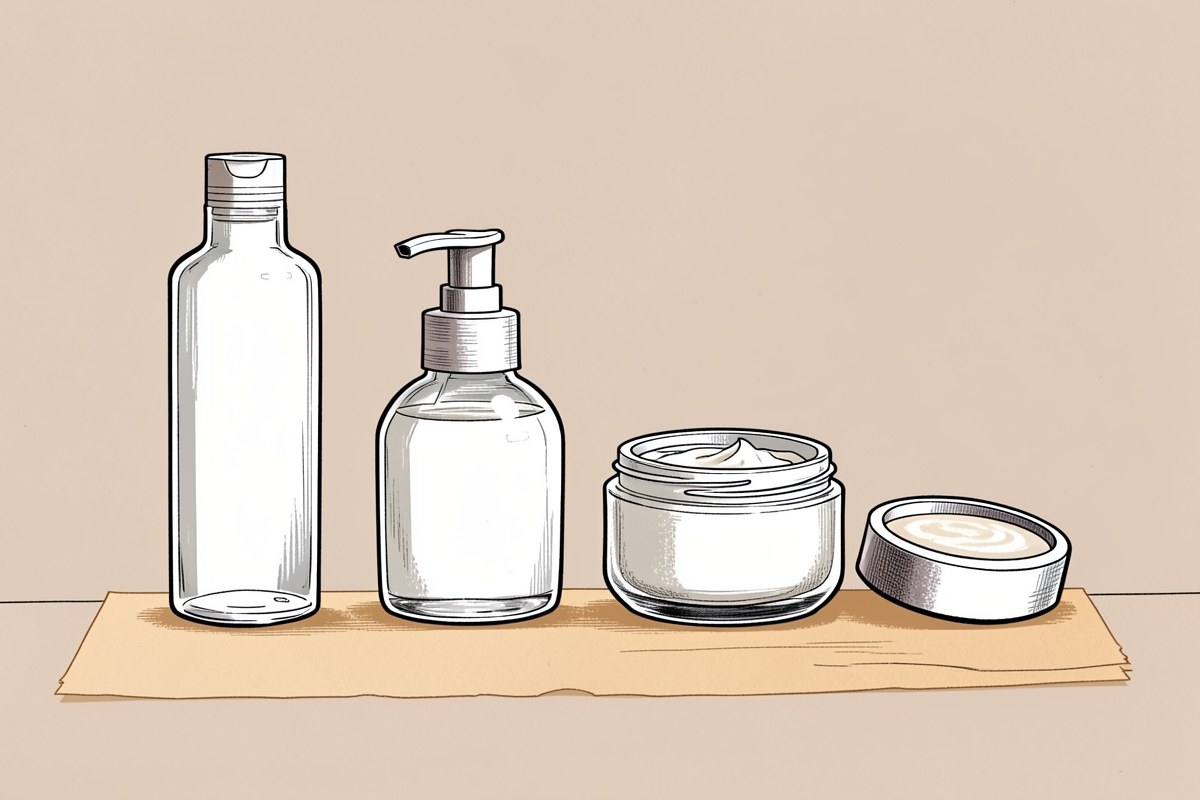
Cream, lotion, gel, and balm formats compared
Format matters because it changes how a product feels, how much oil it leaves behind, and how well it seals in moisture. A gel moisturizer is often water-based and feels lighter on the skin than a lotion. A lotion sits in the middle: lighter than a cream, but with more body than a gel. A cream is thicker and has a higher oil content than a lotion or gel, which generally makes it more hydrating. An ointment is the thickest format and is described as the most effective for remedying dry skin.
The purpose of comparing formats is not to rank them from worst to best. Each one is a tool for a different situation. A gel or light lotion can be enough in warm, humid weather or for skin that becomes oily during the day. A cream or ointment may feel more comfortable in cold, dry conditions or if your skin feels tight after cleansing. Texture is also not the same as strength: a heavier cream is not automatically more moisturizing for every person.
| Format | Typical texture and oil content | Usual best fit |
|---|---|---|
| Gel | Water-based, lightweight, low oil content | Oily skin, warm or humid climates, daytime use under makeup |
| Lotion | Lighter than a cream, moderate oil content | Normal or combination skin, warm weather, everyday use |
| Cream | Thicker, higher oil content than lotion or gel | Dry skin, cold or dry climates, nighttime use, mature skin |
| Ointment or balm | Thickest, highest occlusive content | Very dry or compromised skin, targeted sealing, cold weather |
Sources: American Academy of Dermatology (AAD), National Center for Biotechnology Information (NIH)
Matching format to skin type and climate
Skin type is the starting point, but climate and seasonality matter too. The same person may need a lighter product in summer and a richer one in winter. A product that feels comfortable in a humid climate can feel heavy in a dry one, and a rich cream that works well in winter can feel suffocating in summer.
For dry skin, the guidance is to look for richer, nourishing ingredients such as shea butter, ceramides, and glycerin, and to choose a thicker consistency such as a cream or ointment to help seal in moisture. For oily skin, a lightweight, oil-free moisturizer is usually more comfortable, and a gel-based format is often a good option because heavy or greasy products may clog pores and cause breakouts. Combination skin tends to do well with a lightweight, oil-free moisturizer that combines humectants and occlusive agents, such as glycerin and dimethicone, to provide balanced hydration without clogging pores. Sensitive skin is best served by a fragrance-free and hypoallergenic moisturizer with soothing ingredients such as aloe vera or chamomile, avoiding harsh chemicals or preservatives.
Climate acts as a modifier on top of skin type. In dry or cold conditions, a cream or ointment helps reduce water loss. In warm, humid conditions, a gel or lotion is often enough. Many people find they need to switch formats between seasons rather than using the same product year-round.
- Dry skin: richer ingredients and a thicker cream or ointment format help seal in moisture.
- Oily skin: lightweight, oil-free, gel-based formulas are often more comfortable and less likely to clog pores.
- Combination skin: a lightweight, oil-free formula with both humectants and occlusives supports balanced hydration.
- Sensitive skin: fragrance-free and hypoallergenic formulas with soothing ingredients reduce irritation risk.
- Climate: use lighter formats in warm, humid conditions and richer formats in cold, dry conditions.
Sources: National Center for Biotechnology Information (NIH), American Academy of Dermatology (AAD), Alamo Heights Dermatology
Where moisturizer sits in a routine
The general layering rule is to apply products from lightest to heaviest texture. Water-based products go before anhydrous or oil-based formulations, which are followed by creams or suspensions. Moisturizer is the seal step: it goes after lighter treatments and before sunscreen in the morning.
In a simple routine, that means cleansing, then any water-based treatment such as a hydrating serum, then moisturizer, then sunscreen during the day. At night, the same order applies without sunscreen. If you use a prescription or active treatment, the moisturizer still typically goes after the treatment has absorbed unless a clinician has given you different instructions.
A common mistake is applying a heavy cream before a light serum. That can make the serum harder to spread and can reduce the chance that the lighter product reaches the skin evenly. Following the lightest-to-heaviest rule keeps the routine predictable and helps each product do its job.
- Cleanse.
- Apply water-based treatments such as essences, toners, or serums.
- Apply moisturizer to seal in hydration.
- During the day, finish with sunscreen as the last step.
Sources: The Ordinary (Deciem), Skincare.com (L'Oréal)
Layering with sunscreen and treatments
Moisturizer and sunscreen have different jobs. Moisturizer supports hydration and barrier maintenance, while sunscreen is a protective product. In the morning, moisturizer goes on first and sunscreen goes on last. If your moisturizer and sunscreen are separate products, let the moisturizer absorb before applying sunscreen for even coverage.
When you use active treatments such as exfoliating acids or prescription topicals, the order generally stays the same: lighter, water-based treatments first, then moisturizer. Some people find that a richer moisturizer helps reduce the dryness or tightness that can come with active treatments. If a treatment stings or causes persistent irritation, stop using it and speak with a clinician rather than trying to layer more products over it.
Moisturizer should not be expected to cancel out irritation from a treatment that is too strong for your skin. It can improve comfort, but it is not a corrective layer for a damaged barrier. If your skin is persistently red, burning, or peeling, that is a sign to simplify your routine and seek professional advice.
- Apply moisturizer before sunscreen in the morning.
- Apply water-based treatments before moisturizer.
- Use a richer moisturizer if active treatments leave your skin dry or tight.
- Do not use moisturizer to mask persistent irritation from a treatment; simplify and consult a clinician.
Sources: The Ordinary (Deciem), Skincare.com (L'Oréal), National Center for Biotechnology Information (NIH)
Signs a moisturizer is not working for you
A moisturizer is working when your skin feels comfortable, flexible, and not tight after it absorbs. It is not working when you notice persistent problems that appear or worsen after you start using it. The most common signs are breakouts in areas where you applied the product, a stinging or burning sensation that does not fade, redness, itching, or a feeling that your skin is still dry and rough despite regular use.
Format mismatch is a common cause. On oily or combination skin, a heavy cream or ointment can feel greasy and may clog pores. A light gel or lotion may not be enough for dry skin, especially in winter. Fragrance can irritate sensitive skin, which is why fragrance-free and hypoallergenic options are often recommended for that skin type.
If a product causes a reaction, stop using it and let your skin settle. If the reaction is severe, widespread, or does not improve, seek advice from a board-certified dermatologist or physician. This guide provides general product-selection context and is not personalized medical advice.
- Breakouts that appear after starting a new moisturizer may indicate the format is too heavy for your skin.
- Persistent stinging, burning, redness, or itching is a sign to stop using the product.
- Skin that remains tight and rough may need a richer format or a different ingredient mix.
- Sensitive skin often does better with fragrance-free and hypoallergenic formulas.
Sources: National Center for Biotechnology Information (NIH), American Academy of Dermatology (AAD), Alamo Heights Dermatology
Side-by-side category and decision-criteria matrix
The matrix below compares moisturizer categories against the criteria that matter most when choosing one. It is a decision aid, not a ranking. Use it to narrow the format before you compare individual products, because format determines how a moisturizer feels and how well it matches your skin type and climate.
Each row describes a category rather than a specific brand or product. That keeps the comparison useful across price points and formulations. When you look at a product label, match the format to your skin type first, then check the ingredient list for the functional classes described above.
| Category | Skin type fit | Climate fit | Routine position | Key ingredient focus |
|---|---|---|---|---|
| Gel | Oily, combination | Warm, humid | Daytime, under sunscreen and makeup | Humectants, oil-free occlusives |
| Lotion | Normal, combination, younger skin with seasonal dryness | Mild to warm | Morning or evening | Humectants plus light emollients |
| Cream | Dry, mature, or perimenopausal and 50+ skin (professional commentary) | Cold, dry, winter | Evening or both, depending on dryness | Emollients, occlusives, ceramides |
| Ointment or balm | Very dry, compromised | Cold, dry, windy | Targeted or evening sealing step | High occlusive content |
Sources: National Center for Biotechnology Information (NIH), American Academy of Dermatology (AAD), Alamo Heights Dermatology
Frequently asked questions
Do oily skin types need moisturizer?
Yes. Dermatology-oriented guidance recommends that people with oily skin still use a moisturizer, choosing a lightweight, oil-free, non-comedogenic option. A gel-based format is often a good fit because heavy or greasy products may clog pores and cause breakouts.
Sources: National Center for Biotechnology Information (NIH), Alamo Heights DermatologyIs a heavier cream always more moisturizing?
No. A thicker or heavier moisturizer is not automatically more moisturizing. The appropriate format depends on your skin type. Thinner, lighter formats are generally appropriate for oilier skin, while thicker, richer formats are more appropriate for drier skin. A heavy cream on oily skin can feel greasy and may clog pores without providing better hydration.
Sources: American Academy of Dermatology (AAD)Can one moisturizer work for morning and night?
For some people, yes. A single well-matched moisturizer can be used morning and night if it keeps your skin comfortable and does not cause breakouts or irritation. Others prefer a lighter product in the morning under sunscreen and makeup, and a richer product at night, especially if they use active treatments that leave their skin dry.
Sources: The Ordinary (Deciem), Skincare.com (L'Oréal)Should I change moisturizer in winter?
Many people do. A lighter product may suit warm, humid conditions, while a heavier product may suit cold, dry conditions such as fall and winter. If your skin feels tight, rough, or flaky in winter despite regular moisturizing, a richer cream or ointment is often more comfortable. If a heavier product causes breakouts or feels greasy, step back to a lotion or gel.
Sources: American Academy of Dermatology (AAD), Alamo Heights DermatologySources
- Moisturizers - StatPearls - NCBI Bookshelf - NIH — National Center for Biotechnology Information (NIH)
- How to pick the right moisturizer for your skin — American Academy of Dermatology (AAD)
- Choosing the Best Moisturizer for Dry Skin — Cleveland Clinic
- How to Find the Right Moisturizer for Your Skin Type - Skincare.com — Skincare.com (L'Oréal)
- Back to Basics: How to Build a Regimen | The Ordinary — The Ordinary (Deciem)
- How to Choose Moisturizer - Alamo Heights Dermatology — Alamo Heights Dermatology